Molecular Machines
Every cell runs on protein machines. They are turbines, walkers, assemblers and pumps. See how each one works in 3D, drawn from real Protein Data Bank structures.
Composite scene for illustration. The bacterial flagellar motor sits in a patch of bacterial envelope. Each molecule is a real PDB structure, drawn one sphere per residue. Point at one to name it. Select it to open its page.
Explore
Start with one of the three featured machines, or pick any other. Every picture below comes from PDB coordinates, drawn in the browser.
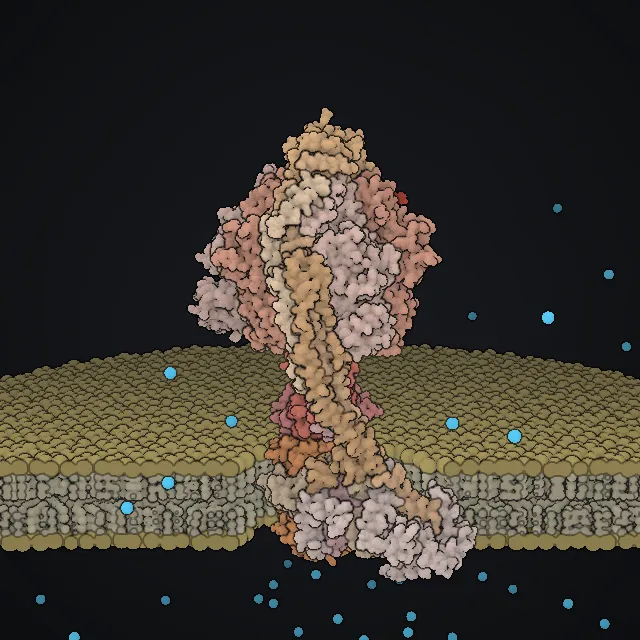
Rotary motors
ATP synthase
A proton-driven rotary motor that makes most of the cell's ATP
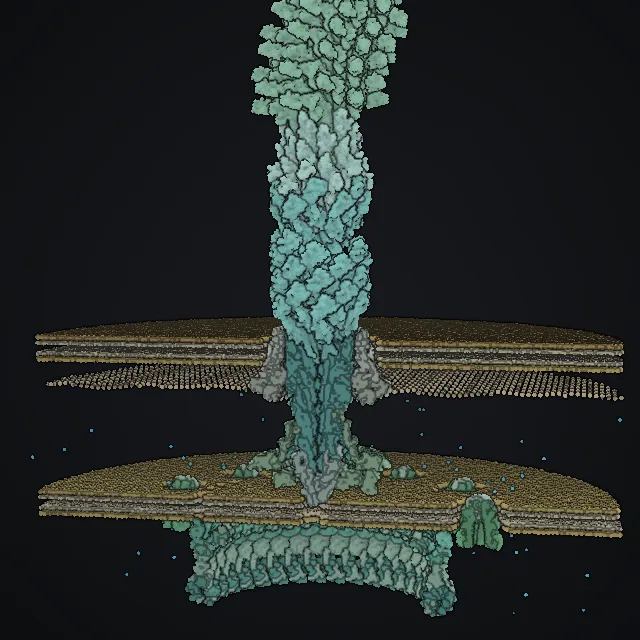
Rotary motors
Bacterial flagellar motor
An ion-driven, reversible rotary motor that turns the bacterial flagellum
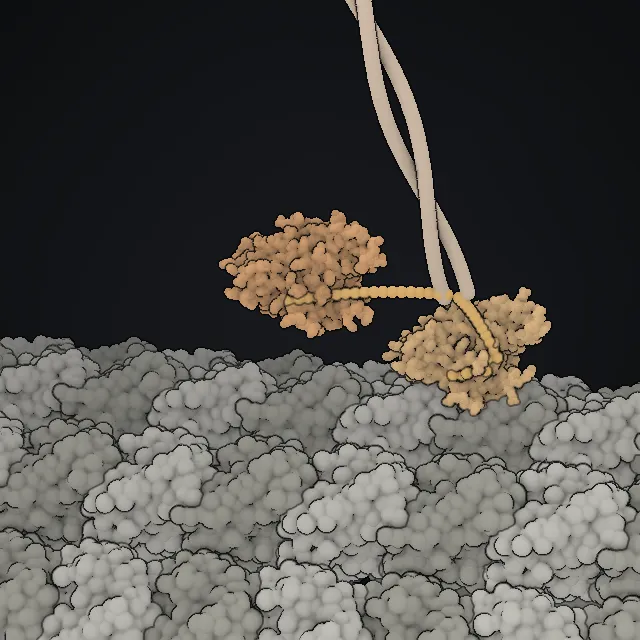
Walkers and crawlers
Kinesin
Walks toward the microtubule plus end in 8 nm steps, one ATP per step
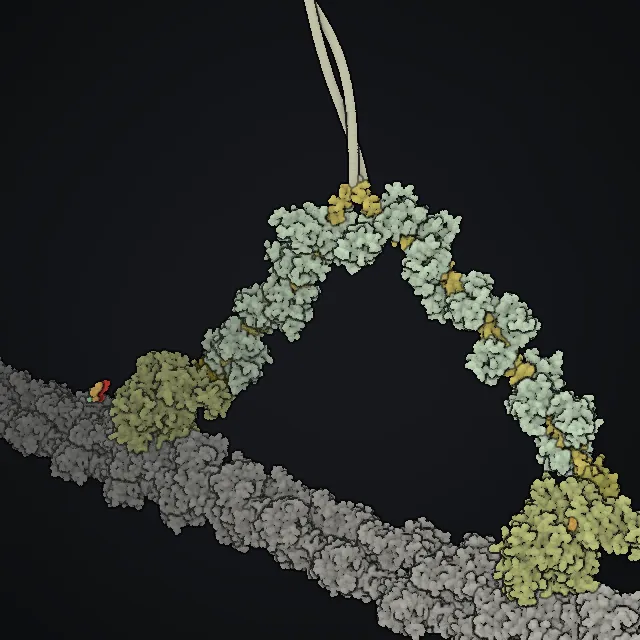
Walkers and crawlers
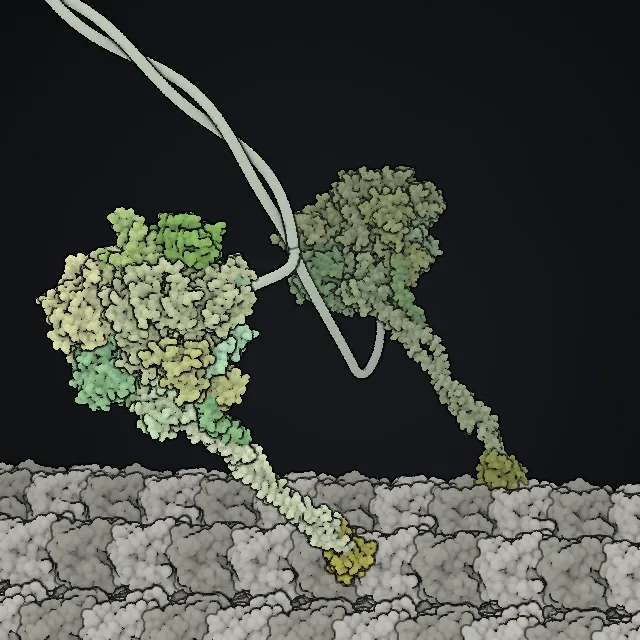
Myosin
Swings a lever arm on actin to pull filaments and haul cargo
Walkers and crawlers
Dynein
A ring of six ATPases that walks to the microtubule minus end
Readers and writers
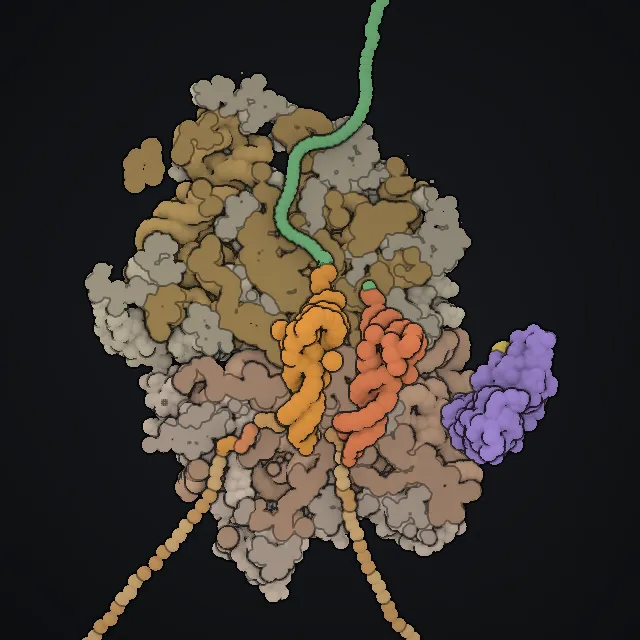
Ribosome
Reads mRNA and builds the matching protein chain
Readers and writers
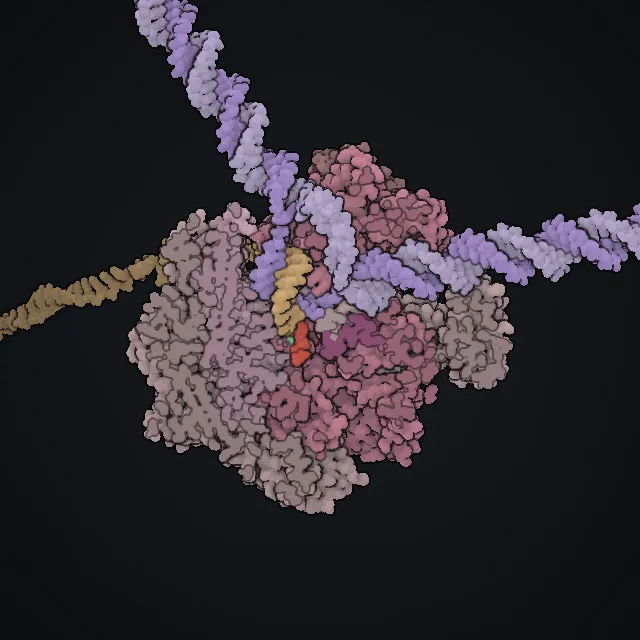
RNA polymerase II
Copies a DNA gene into messenger RNA, one base at a time
Folding
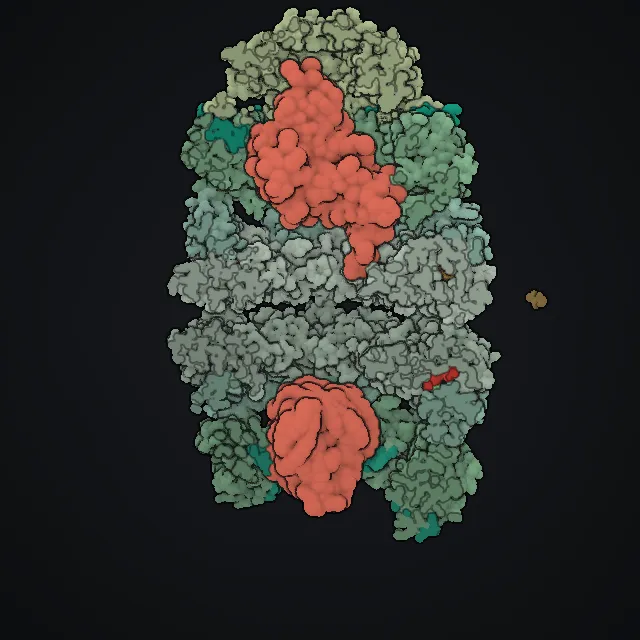
GroEL–GroES
An ATP-driven cage that holds one protein while it folds
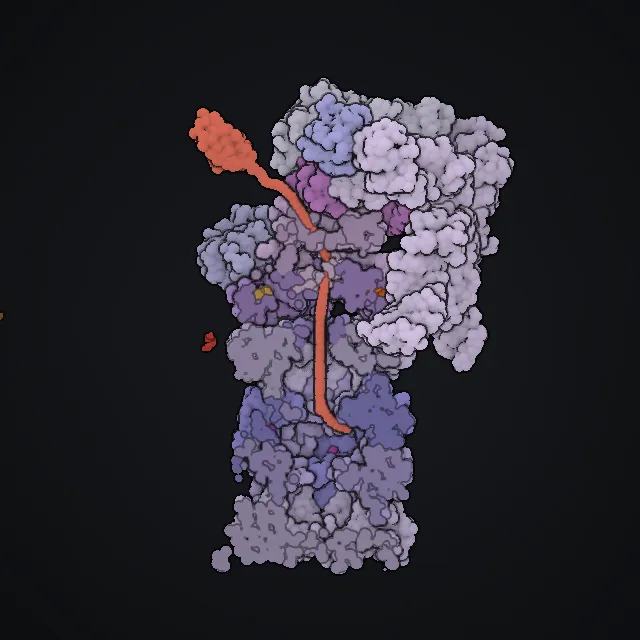
Recycling
Proteasome
An ATP-driven shredder that pulls tagged proteins apart
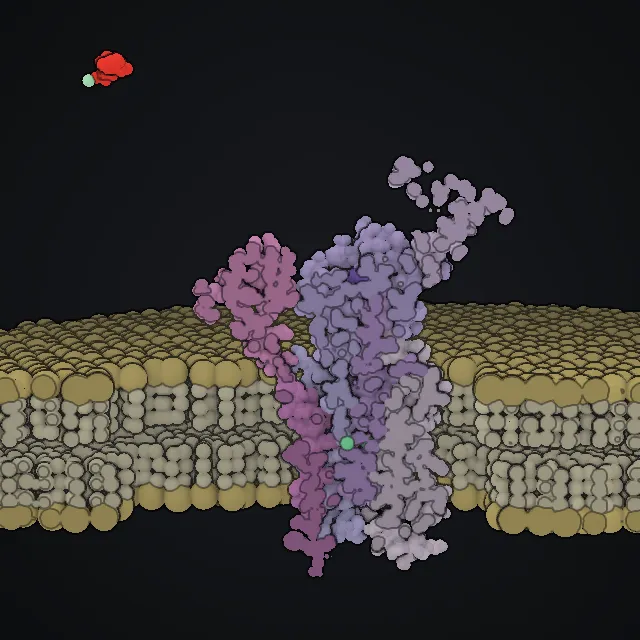
Pumps
SERCA calcium pump
Burns one ATP to push two calcium ions out of the cytoplasm
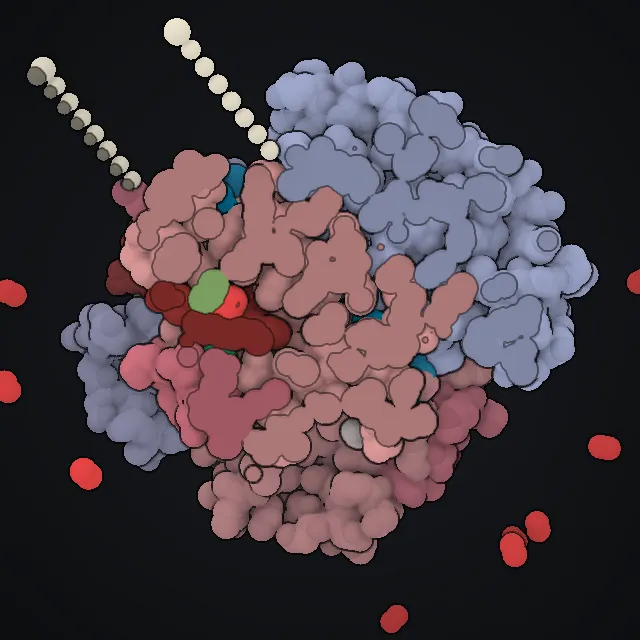
Switches
Hemoglobin
Four-part oxygen carrier that loads and unloads as a single switch
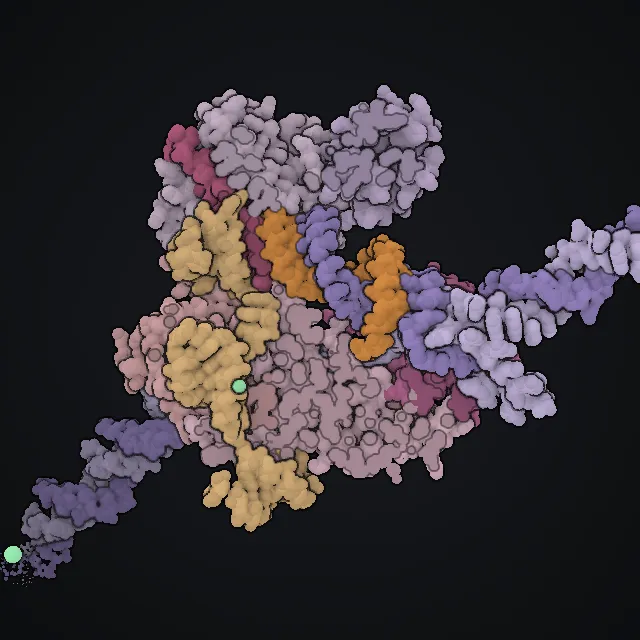
Defence and editing
Cas9
RNA-guided nuclease that finds one DNA sequence and cuts both strands